Claim Your Free, No-Obligation Estimate Today
Avoid Costly Errors: 5 Dangerous Tree Care Mistakes to Watch Out For
How Poor Tree Management Destroys Property Value
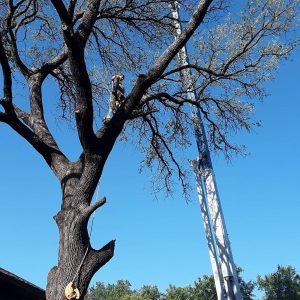
Mistake 1: Topping Trees Instead of Proper Pruning
Topping involves cutting large branches back to stubs or removing the entire crown of a mature tree. While property owners often choose this approach thinking it will reduce height quickly or prevent storm damage, topping creates far more problems than it solves and frequently leads to expenses exceeding several thousand dollars in remediation or removal costs.
When a tree is topped, the sudden removal of its leafy crown eliminates its ability to produce food through photosynthesis. The tree responds by rapidly generating weak, poorly attached sprouts from the cut stubs. These new shoots grow much faster than normal branches, creating dense, unbalanced growth that becomes hazardous within just a few years. In Central Texas, where summer heat regularly exceeds 100 degrees and drought conditions stress trees from May through September, topped trees struggle even more to recover. The exposed trunk and large branch stubs become vulnerable to sunscald, a condition where intense UV radiation damages living tissue beneath the bark.
The financial consequences compound quickly. Topped trees require corrective pruning every one to two years as the weak shoots grow rapidly and become safety hazards. Each pruning session can cost between $500 and $1,500 depending on tree size. Topped trees also become magnets for wood-boring insects and fungal pathogens that enter through the large wound surfaces. Oak wilt, a lethal disease prevalent throughout Central Texas, spreads easily through fresh pruning wounds, and a single infected tree can require emergency removal costing $2,000 to $5,000 or more. Property owners who top trees often face premature tree death within five to ten years, necessitating complete removal and replacement.
Proper crown reduction techniques preserve the tree’s natural structure while achieving height or spread reduction. Certified arborists make selective cuts at lateral branches, maintaining the tree’s defense mechanisms and structural integrity. This approach costs more initially but eliminates the recurring expenses and safety hazards associated with topping. For property owners in Holland and surrounding areas, investing in proper pruning services protects both tree health and long-term property value.
Mistake 2: Ignoring Root Zone Protection During Construction
Construction activity near existing trees represents one of the most destructive yet preventable threats to tree health. When heavy equipment compacts soil, excavation severs roots, or grade changes bury or expose root systems, trees suffer damage that may not become visible for two to five years. By the time decline symptoms appear, the damage is irreversible, and property owners face removal costs for trees that could have been preserved with proper planning.
Tree roots extend far beyond the drip line, typically spreading two to three times the radius of the canopy. The critical root zone, where most absorptive roots concentrate, extends at least to the drip line and contains the fine roots responsible for water and nutrient uptake. When construction equipment drives over this area, soil compaction destroys the pore spaces necessary for root respiration. Compacted soil prevents oxygen from reaching roots and water from infiltrating properly. In the clay-heavy soils common throughout McLennan County and Bell County, compaction effects are particularly severe and long-lasting. These dense soils already drain poorly, and compaction creates essentially impermeable conditions that suffocate root systems.
Grade changes present equally serious threats. Adding as little as two to four inches of soil over a tree’s root zone can suffocate roots by reducing oxygen availability. Conversely, lowering the grade exposes structural roots to air and sunlight, causing them to dry out and lose their anchoring capacity. Trenching for utilities, drainage, or foundations severs major roots, compromising the tree’s stability and cutting off water and nutrient pathways to portions of the canopy.
The financial impact becomes apparent when previously healthy trees begin declining three to five years post-construction. Canopy dieback, increased susceptibility to drought stress, and structural instability necessitate removal of trees that may have been the property’s most valuable landscape assets. Mature shade trees can add $1,000 to $10,000 to property value, and their loss requires decades to replace. Emergency removal of a large declining tree near a home typically costs $3,000 to $8,000, plus an additional $1,500 to $4,000 for stump grinding and site cleanup.
Protecting trees during construction requires establishing physical barriers around the critical root zone before any site work begins. Professional tree care providers assess which trees are worth preserving, determine appropriate protection zones, and monitor compliance throughout the project. This proactive approach costs a fraction of the replacement value. Consulting with specialists before beginning any construction project protects your investment in mature landscape trees.
Mistake 3: Using Climbing Spikes on Trees That Aren’t Being Removed
Neglecting proper pruning techniques can lead to weak branch structures, disease proliferation, and safety hazards that require expensive remediation. Many property owners attempt to prune trees themselves without understanding growth patterns, wound response, or structural integrity principles.
Improper cuts that leave stubs or remove too much canopy at once stress the tree and create entry points for pathogens. Topping—the indiscriminate removal of large portions of the crown—destroys the tree’s natural form and triggers weak, hazardous regrowth. Over-thinning removes too much foliage, reducing the tree’s ability to photosynthesize and defend itself.
Timing also matters significantly. Pruning during active growth periods can cause excessive sap loss and attract pests, while pruning certain species at the wrong time increases disease susceptibility. Professional arborists understand species-specific requirements, structural pruning principles, and optimal timing to maintain tree health and safety.
Trees that have been improperly pruned often require corrective work that costs far more than preventive professional service would have. In severe cases, the damage is irreversible, necessitating complete removal.
Mistake 4: Planting the Wrong Tree in the Wrong Location
Poor tree selection and placement decisions create problems that worsen over decades, eventually requiring expensive corrective action or complete removal. While a young tree may seem small and manageable at planting, failure to account for its mature size, root behavior, and environmental requirements leads to conflicts with structures, utilities, and hardscapes that can cost thousands to resolve.
Many property owners select trees based on nursery appearance or immediate landscape impact without researching mature dimensions. Fast-growing species like Arizona ash, silver maple, and Bradford pear are particularly problematic. These trees reach 40 to 60 feet tall with similarly wide canopies, and their aggressive root systems infiltrate sewer lines, crack foundations, and heave sidewalks and driveways. In the black clay soils prevalent throughout Bell County and McLennan County, expansive soil movement already stresses foundations. Large trees planted too close to structures exacerbate this problem by extracting moisture from soil during hot, dry summers, causing soil to shrink and foundations to shift or crack. Foundation repair costs typically range from $3,500 to $15,000 depending on damage severity.
Utility conflicts create ongoing expenses and safety hazards. Trees planted beneath or too near overhead power lines require frequent, aggressive pruning to maintain clearance. This pruning disfigures the tree and shortens its lifespan while costing $300 to $800 every few years. Underground utilities present equally serious concerns. Tree roots infiltrating sewer lines cause backups and pipe damage, with repair costs frequently exceeding $3,000 once excavation and line replacement become necessary. Water lines damaged by root intrusion may leak for years before detection, wasting water and potentially undermining foundations or driveways.
Environmental mismatches cause chronic stress and premature mortality. Trees requiring consistent moisture and acidic soils struggle in Central Texas’s alkaline clay and extended drought periods. Species like dogwoods, azaleas, and Japanese maples, while beautiful in appropriate climates, decline rapidly in local conditions despite intensive care. Each watering, fertilization, and pest management intervention adds cost while the tree continues to struggle. Ultimately, property owners remove these mismatched trees and start over, having invested years of care and hundreds of dollars in a failing landscape element.
Proper tree selection begins with understanding the planting site’s conditions, including soil type, drainage, sun exposure, and available space. Consulting with qualified professionals before purchasing and planting trees prevents costly mistakes. Professional tree planting services include site assessment, species selection, and proper installation techniques that establish trees for long-term success. This investment pays dividends for decades by eliminating the recurring costs and safety hazards associated with poorly chosen or improperly placed trees.
Mistake 5: Delaying Removal of Dead or Hazardous Trees
Dead and structurally compromised trees represent one of the most serious liabilities on residential and commercial properties. Yet property owners frequently postpone removal, hoping to avoid the expense or believing the tree will remain standing indefinitely. This delay transforms a manageable situation into an emergency that costs significantly more to resolve and may result in property damage or injury.
Dead trees lose structural integrity rapidly as decay progresses through the trunk and major limbs. Wood-boring beetles and fungi colonize dead tissue, hollowing out structural elements that appear solid from the outside. Wind, ice, and even the tree’s own weight can cause catastrophic failure without warning. In Central Texas, severe thunderstorms occur most frequently from April through June, bringing straight-line winds that regularly exceed 50 miles per hour. These storms topple compromised trees that might have remained standing in calm conditions. A large tree falling onto a home can cause $15,000 to $100,000 in damage, not counting potential injury to occupants.
The cost of tree removal increases dramatically once a tree becomes a true emergency. Routine removal of a dead tree in an open area might cost $1,500 to $3,000, depending on size. The same tree, after it has fallen onto a structure or power lines, requires emergency response at premium rates, often costing two to three times the routine removal price. Additional costs include emergency tarping and temporary repairs to prevent further water damage, debris cleanup, and potential crane rental if the fallen tree must be removed from difficult positions. If the tree damages power lines, electrical service restoration may take days during peak storm season when utility crews are overwhelmed with calls.
Insurance considerations add another financial dimension. Homeowner’s insurance policies typically cover storm damage from healthy trees that fail due to weather events. However, if an insurance adjuster determines that the tree was obviously dead or hazardous and the property owner neglected reasonable maintenance, the claim may be denied. Insurance companies increasingly require documentation that property owners maintain trees properly. Denied claims leave property owners responsible for all damage repair costs.
Trees displaying hazard indicators require immediate professional assessment. Warning signs include large dead branches in the canopy, missing bark on the trunk, fungal fruiting bodies at the base, significant lean, cracks in the trunk or major limbs, and hollow or decayed areas. Property owners in Temple, Killeen, Waco, and surrounding communities should have trees inspected after severe storms or if any decline symptoms appear. Professional tree diagnosis and consulting services identify problems early when removal remains straightforward and affordable. Timely action prevents emergencies and protects both property and people from preventable harm. Regular inspections by qualified professionals provide documentation of proper maintenance, supporting insurance claims should weather-related failures occur.